Philosophy
Ideas examined: ethics, knowledge, mind and meaning.

-
A Better Question
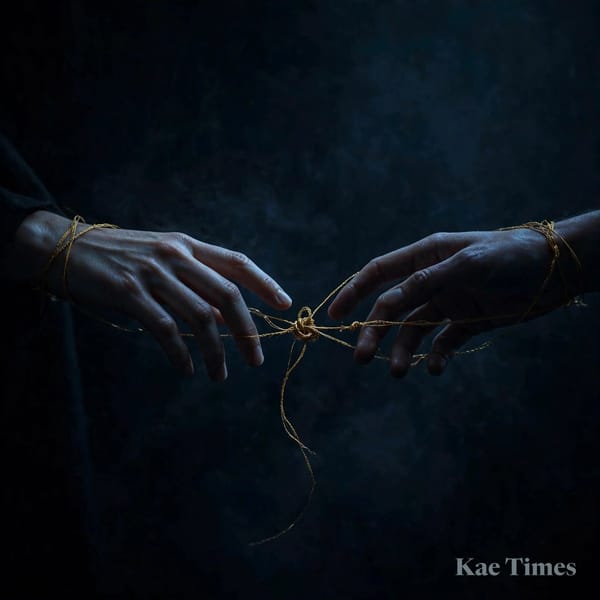
The Complicity of Loyalty
Your oldest friend calls at midnight. They have done something wrong, and they need you to keep it secret. The request arrives wrapped in years of shared history, inside jokes, saved letters. What does friendship demand now, and what does it forbid?
-
A Better Question
The Partiality of Friendship
We treat friendship as merely pleasant, yet it makes demands no contract can capture and no universal principle can justify. Between the impartiality of justice and the unconditional nature of love lies a distinct moral sphere: the loyalty we owe to those we have chosen to see fully.
-
A Better Question, no. 27
What You Attend To Becomes Your Life
Attention is the rarest and purest form of generosity, Simone Weil wrote. Yet most of us spend it the way we spend loose change: automatically, without noticing what we are paying for. What would it mean to treat attention as a moral matter?
-
A Better Question, no. 26
The Stranger You Will Become
You will disagree with your future self about what matters, and one of you will be wrong. If the person you become replaces the person you are, on what ground do you keep a promise, save money, or stay faithful to a life?
-
A Better Question, no. 25
The Person Who Disagrees With You
Someone intelligent, honest, and informed looks at the same evidence you do and reaches the opposite conclusion. You can dismiss them as deceived, or take their existence seriously. What should disagreement itself teach us?
-
A Better Question, no. 24
The Attention We Owe
We live in an age of distraction, but attention is not merely a cognitive resource to be managed. It is a moral stance toward reality. What does it mean to truly attend to another person, to a text, to the present moment? And what do we lose when we fail?
-
A Better Question, no. 22
The Ethics of Intellectual Humility
We praise the willingness to admit error, but humility has a shadow side. When does openness become paralysis? When does the fear of being wrong silence the courage to stand for something? The difficult question is how to hold conviction and uncertainty together.
-
A Better Question, no. 21
The Problem of Moral Luck
We judge ourselves and others by outcomes we never controlled. A reckless driver who kills a child is worse than one who merely damages a fender, though their recklessness was identical. If morality is about character, why does fortune determine our blame?
-
A Better Question, no. 20
The Weight of Unlived Lives
We mourn not only what we lose, but what we never became. The philosopher who never wrote the book, the parent who never had the child, the self that remained potential. Is regret a failure of wisdom, or its most honest expression?
-
A Better Question, no. 18
The Architecture of Habit
We imagine character is forged in crisis, revealed in the grand moral moment. But ethics is built in repetition; the daily walk, the morning ritual, the way we greet a student. What are we becoming in the habits we no longer notice?
-
A Better Question, no. 17
The Wisdom of the Particular
We want moral certainty, general rules to guide us through every dilemma. But life is lived in specifics. When principles fail, what remains is practical wisdom: the capacity to see what matters here, now, with this person. Can this be taught, or only learned?
-
A Better Question, no. 15
The Moral Weight of Regret
We celebrate resilience and forward motion, yet we rarely examine the moral significance of looking back. Regret is not a failure to be overcome; it is the shadow cast by genuine choice. What does it mean to live with what we cannot undo?
-
A Better Question, no. 14
The Labor of Attention
We praise empathy and action, yet we rarely examine the quality of our attention. But attention is the foundation of all moral perception. What are we missing when we refuse to truly look, and what does it cost to see?
-
A Better Question, no. 13
The Work of Moral Imagination
You can follow every moral rule and still fail to see the person before you. Moral imagination is the capacity to perceive others as full centers of experience, not as obstacles or instruments. What does it cost to truly see, and what do we lose when we refuse?
-
A Better Question, no. 12
The Horizon of Mortality
You live as if you have infinite time, yet you know you do not. Death is not merely an event at life's end; it is the horizon that gives shape to every choice. What changes when we stop fleeing our finitude and begin to inhabit it?
-
A Better Question, no. 11
The Work of Forgiveness
You have been wronged, and the debt cannot be paid. Yet you are told to forgive, as if this were merely a decision to stop feeling anger. But forgiveness is not a mood or a gift; it is a complex moral achievement that transforms both the wronged and the wrongdoer.
-
A Better Question, no. 10
The Luck of the Moral Life
You are judged for what you did, yet much of what you did depends on what you never chose: your birth, your temperament, the consequences that followed your actions. Is moral character an achievement or an accident of circumstance?
-
A Better Question, no. 9
The Discipline of Attention
You cannot think without attending, yet attention is the first thing we surrender to urgency. What would it mean to treat looking as a moral discipline rather than a passive state, and to recognize that how we attend shapes who we become?
-
A Better Question, no. 8
The Minds We Cannot Know
You will never experience my headache, and I will never experience yours. We assume other humans have inner lives like our own, but we cannot prove it. This is not merely an academic puzzle; it is the foundation of empathy, love, and the limits of understanding.
-
A Better Question, no. 7
The Weight of What We Owe
You promised to meet a friend for coffee, yet you stay home to finish work. No one is harmed, yet something is broken. The ethics of small promises reveals how obligation binds us not through consequences, but through the invisible architecture of trust that makes human life possible.
-
A Better Question, no. 6
The Guilt of Necessary Choices
A soldier must shoot one prisoner to save twenty. A doctor must choose who receives the only ventilator. Both choose rightly, yet both bear guilt. Some choices leave moral traces no justification can erase. What do we owe the road not taken, and how do we live with the cost of choosing at all?
-
A Better Question, no. 5
The Authorship of a Life
You speak of your life as a story with yourself as the protagonist, learning and growing toward meaning. But what if this narrative mode is not truth but comfort? What if the self is not a tale being written but something stranger, more fragmented, more immediate?
-
A Better Question, no. 4
The Lottery of Blame
You drove carefully yet killed a child who darted into the road. Another drove drunk yet arrived home safely. We blame the first and excuse the second, yet both made their choices; only luck differed. What does this reveal about the limits of moral responsibility?
-
A Better Question, no. 3
The Moral Weight of Attention
You cannot be kind to what you do not see. Before every moral act lies a prior choice: the direction of your attention. Yet we treat looking as passive, not ethical. What changes when we recognize that noticing is the first moral labor?
-
A Better Question, no. 2
The Minds We Cannot Enter
You see bodies move, hear words spoken, observe tears and laughter. But you have never touched another consciousness directly. How do you know that anyone besides yourself actually feels, fears, or hopes? The answer reveals the limits of certainty and the beginning of ethics.
-
A Better Question, no. 1
When Good People Disagree
You and a colleague both value justice, yet disagree on the same policy. Neither is stupid; neither is evil. Where does the divergence come from? The answer reveals something uncomfortable: moral reasoning resembles interpretation more than mathematics.