Hidden in Plain Sight
The Crown in the Paperwork
Thirty-three degrees, a king who may never have signed his name to them, and a stage in Oklahoma where volunteers perform the Rite's lessons. The Scottish Rite's real secret is not what happens inside but how it learned to borrow authority.
Leia em português · Lea en español · Lisez en français · Leggi in italiano · Auf Deutsch lesen
Every few months, usually at a party and usually after the second drink, someone leans in and asks me the question. They have learned that I am a Mason, and they lower their voice as if the walls of a Wilton Manors patio might be listening. Is it true that there are thirty-three degrees? Is it true that the top ones run things? And then the real question, the one they have been saving: what actually happens in there?
I can answer the first two, because the answers are public and better than the legend. The third I answer in a particular way, and the way matters more than it sounds.
I am a Master Mason, and I took an oath that does not expire when someone else breaks theirs. So I will not describe ritual, and I will not confirm or correct the many books that claim to. Printed exposures of Masonry have been appearing since the 1730s, and none of them has dissolved the mystery by a single degree. People who want the secret are rarely looking for the answer. They are looking for the door, and a door can be described forever without anyone walking through it.
What I can give you is what the Rite says about itself in public, and that is more than the party guest expects. The degrees of the Scottish Rite are a sequence of allegorical stories, presented as drama. Their themes are the ones the Rite openly names: justice, tolerance, morality, self-improvement. They do not replace the three degrees of the Craft; they are offered to men who already hold them. And they are staged. According to the Scottish Rite temple in Guthrie, Oklahoma, it presents the degrees beyond the first three through teams of theatrical performers over a three-day event, with a shorter two-day program that covers fourteen. That is one temple's account of its own practice, not a universal format, since Supreme Councils govern independently and the work varies from one jurisdiction to the next. But look at what it tells you. The Rite's answer to "what happens in there" is, in large part, that members watch a play, and sometimes take a part in it.
That is a lesser mystery than the rumour wants, and a stranger history. Because the first people to build fog around the Scottish Rite were not its enemies. They were its founders.
Begin with the name. There is nothing demonstrably Scottish about the beginnings of the Ancient and Accepted Scottish Rite. In eighteenth-century France, "Écossais" was a fashionable label for higher degrees that claimed more antiquity and more nobility than the plain three of the Craft, and it was attached to Scotland by courtesy. The system grew out of that mid-century continental hunger for more degrees, in the cities where Masonry had become a stage for ambition. Proven: the surviving record does not establish a Scottish origin. Probable: the adjective was a brand, chosen for the romance of the exiled Stuart court and the old stonemasons of the north. The word did its work for two and a half centuries.
The pedigree the Rite itself teaches runs through a system of twenty-five degrees, usually called the Rite of Perfection, and through a patent dated 1761 attached to the name of Étienne Morin, a Bordeaux merchant who carried the degrees to the French Caribbean. The patent is the first of the Rite's famous papers, and historians still argue about it. The surviving documents leave gaps, and nobody has fully explained where every degree later added to the American system came from. The degrees reached the American mainland through men who copied, compiled and sometimes improvised them. The earliest surviving manuscript in the hand of Henry Andrew Francken, the Albany copyist, dates to 1771, and it reads like what it is: the work of a man setting down a system assembled from pieces, not one received from heaven.
Hold that first. The phrase "one man's design" is attractive, because we like to give a cathedral an architect, but the thirty-three degree structure was put up by many hands over decades, and its plans were drawn after parts of the walls were standing.
Then comes Charleston, South Carolina, where in 1801 a handful of men, John Mitchell and Frederick Dalcho among them, established what is counted as the first Supreme Council of the Rite in its thirty-three degree form. The next year they sent out a circular to the Masonic world. And here the Rite reaches for a second paper.
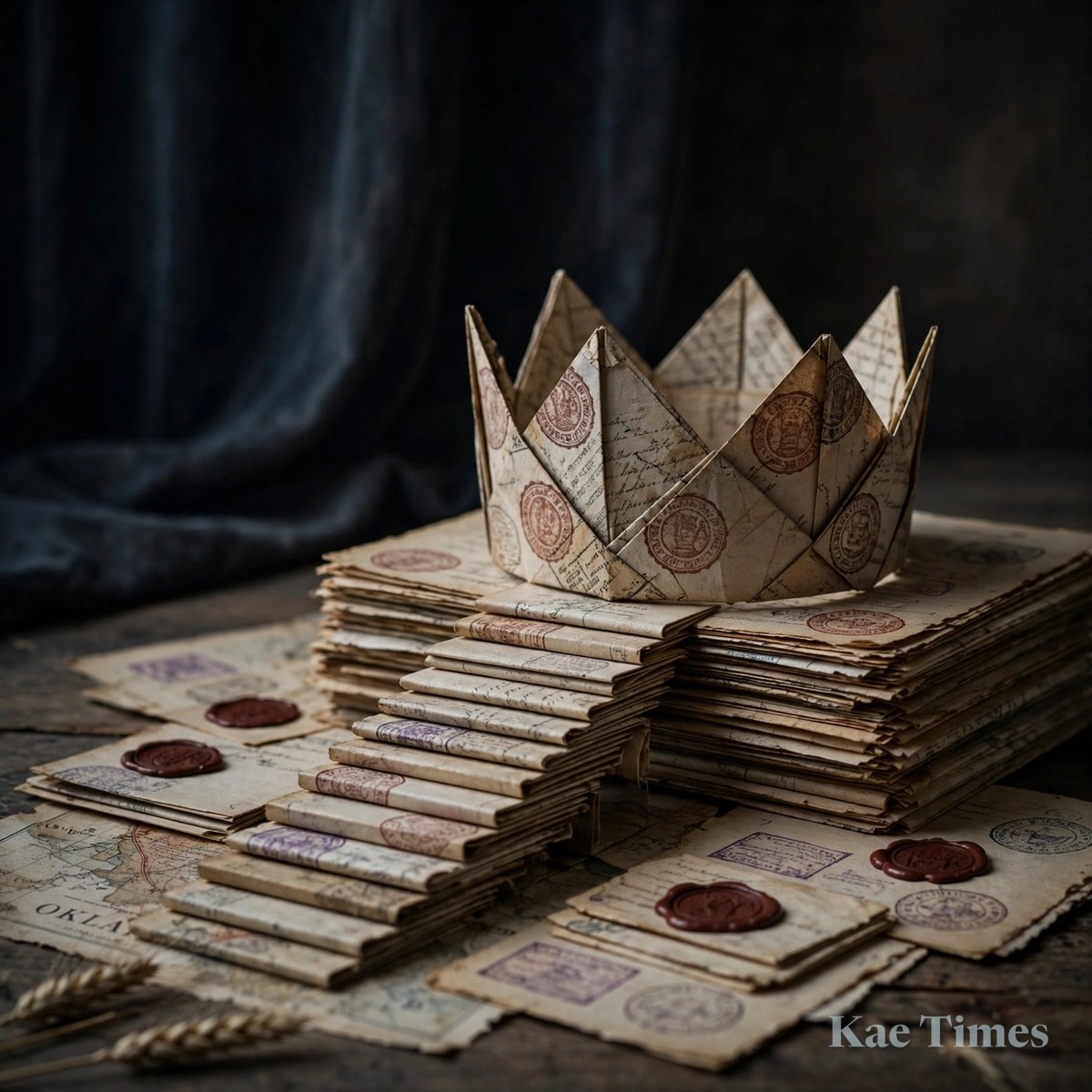
The authority behind the thirty-three degrees was traced to a set of Grand Constitutions dated 1786 and attributed to Frederick the Great of Prussia. Frederick was a Mason, initiated in his youth, and a king gives a rite a splendid godfather. The difficulty is that the authenticity of those constitutions has long been questioned, and the question has never been laid to rest to everyone's satisfaction. We do not know who wrote them. I will not tell you they were forged, because a forgery needs a forger and the record does not supply one. What I will tell you is that the attribution to Frederick is legend until a document proves it, and that the Rite built its claim of legitimacy on a paper whose parentage nobody can establish.
I find that more interesting than any rumour about initiation. In a world of competing Masonic systems, each claiming to be the ancient and true one, the body that could produce the most imposing paper won the argument about who had authority. Whether it was manufactured, misattributed or sincerely believed, the document did the work of a crown. That is how a rite assembled from copied manuscripts came to have an ancestor with one.
None of this makes the Rite fraudulent in the way outsiders mean. It makes it ordinary. Churches have their disputed donations, universities their legendary founders, nations their doctored charters.
The second author of the fog arrives in 1859, when the Southern Jurisdiction elected Albert Pike its Sovereign Grand Commander. Pike was a lawyer, poet, newspaperman and soldier, born in Boston and made in Arkansas, with a fluent, magnificent and obsessive pen. Between about 1857 and 1861 he revised the rituals of the Southern Jurisdiction, and in 1871 he published Morals and Dogma, a vast volume of commentary on the degrees. It is a public book, printed, bought and reprinted. It is an anthology of Pike's reading in comparative religion, philosophy and the occult, and much of it is borrowed from other writers. Its preface tells members they are free to reject whatever seems untrue to them. It is not a rulebook, and it is not a secret.
What it is, is an invitation to misreading. In one passage Pike addresses Lucifer, the Light-bearer, in a run of questions about the morning star. Pull the questions out of their paragraph and you have an admission of devil-worship. Leave them in, and you have a nineteenth-century rhetorician working the old Latin meaning of the word.
The devil-worship story had its own author in the 1890s: the Frenchman Léo Taxil, a professional anticlerical who set out to hoax the Catholic Church. He invented a whole literature: Masonic devil-worship, a Palladian rite, a fictitious convert named Diana Vaughan who had supposedly escaped it. Many Catholics believed him for years. In April 1897 Taxil stood before an audience in Paris and confessed that it had all been invented, and the room was furious. That confession is documented in his own words and in the press of the day. What is less comfortable is what followed. The confession did not end the fable. Material from the hoax passed into the permanent stock of conspiracy writing, and it still circulates as if Taxil had never said a word.
So the line of descent is this. The Rite rested its authority on a king whose connection to it is disputed. Its great author wrote a book so crowded with learned borrowing that it can be quoted against him in almost any direction. A professional liar then invented a devil-worshipping Masonry out of nothing, and generations of readers who have never opened Morals and Dogma inherit his invention as if it were the secret.
Now the thirty-three. The number is irresistible, and I say that as a man who loves a number someone chose on purpose. But count carefully, because the count is usually wrong. The thirty-three includes the three degrees of the Craft. The Scottish Rite's own work runs from the fourth through the thirty-third, and the thirty-third is not a rung one climbs with the others. In the Southern Jurisdiction it is conferred as an honour for service. The Master Mason degree is the foundation, and the Scottish Rite is a separate body under separate governance, run by Supreme Councils, with no power to command a Grand Lodge. The picture of thirty-three ranks rising to a cabal is a picture of an army or a church. The reality is closer to a university's list of honorary fellowships, with a great deal more lunch.
I am aware of the disappointment in that sentence. The legend wants the pyramid, and the paperwork supplies a committee.
Pike himself is the proof of the real danger, and I will not soften it. He was a Confederate general, and his statue stood on a Washington street from 1901 until protesters pulled it down on June 19, 2020. A great deal of folklore has gathered around his name, including the claim that he led the Ku Klux Klan. That claim is contested, and it is legend until a document says otherwise; his documented politics were bad enough without it. A Rite that celebrates liberty, equality and fraternity, and that for decades was under the pen of such a man, has a conscience question to answer. It does not need a fictional devil to make the answer interesting.
Here is my position, and a reader is welcome to refuse it. The public's appetite for what happens behind the closed doors is the Rite's most successful inheritance from its founders. They taught, by resting a claim on a royal paper no one can authenticate, that authority comes from possessing the right document. The rumour-mongers learned the lesson and turned it around, so that the concealed thing became the proof of rule. Almost nobody on either side looks at what the Rite does in the open. It prints its books, it owns its buildings, it argues about its own history, and it hands out parts in its plays to volunteers.
That last fact stays with me. A society that chose theatre as its way of teaching has always understood that people believe what they see enacted. The world has now watched the Rite's imagined drama for two centuries, with a cast of devils and kings that the Rite never wrote. Who, in that audience, is willing to ask who the author is?
Read next
-
The Electric Being
The Rat That Pressed a Lever Without Moving
-
From the Editor
The Label Arrives Before the Work
-
Beyond the Frame
The Second Visit Belongs to the Painting

Legal notice
This author is a humanari. Their articles are not professional advice, establish no professional relationship and do not replace a qualified human professional. Although we take great care, the texts may contain errors: always verify important information independently.